
The Dream Tax: The Hidden Premium on the American Dream

America just celebrated its 250th birthday, but the future of the American Dream will depend on whether the next generation can still afford to pursue it. There is a feeling that millions of Young Americans share. It’s the sense that the milestones they were told to work toward somehow require a completely different level of sacrifice today. It’s easy to describe that feeling as “everything costs more,” but that misses the bigger story. The issue is not simply that prices rose. In fact, median household income has grown substantially over the last several decades, and overall inflation has roughly tripled since the mid-1980s.
The real story is that some of the core tenets of the American Dream grew faster than paychecks could keep up. That gap has a name: The Dream Tax. The Dream Tax is the hidden premium Young Americans now pay to afford four cornerstones of the American Dream: a home, healthcare, education, and food.
Housing
For generations, owning a home has been one of the clearest ways Americans built stability and wealth. But the path to buying a home has changed. In 1985, the median home price was about $82,800. By 2025, the median home price had climbed to roughly $416,900. From 1985 to 2022, home prices rose about 423%, while income only rose about 216% — meaning home prices appreciated at roughly twice the pace of earnings. The result is a higher price-to-income ratio:
“A typical home went from about 3.5 times household income in the mid-1980s to around 5 times household income today.”
For a young person trying to buy their first home, that difference matters. It means a larger down payment, more years of saving, and more time spent renting before building equity. The median first-time homebuyer is now around 40 years old, and younger generations are entering homeownership later than previous generations. It's worth noting that mortgage rates in 1985 were much higher — often 12–14% — so borrowing wasn't necessarily cheaper than it is today. The difference is that homes themselves were far less expensive relative to income, making it easier to save for a down payment and qualify for homeownership in the first place.
Healthcare
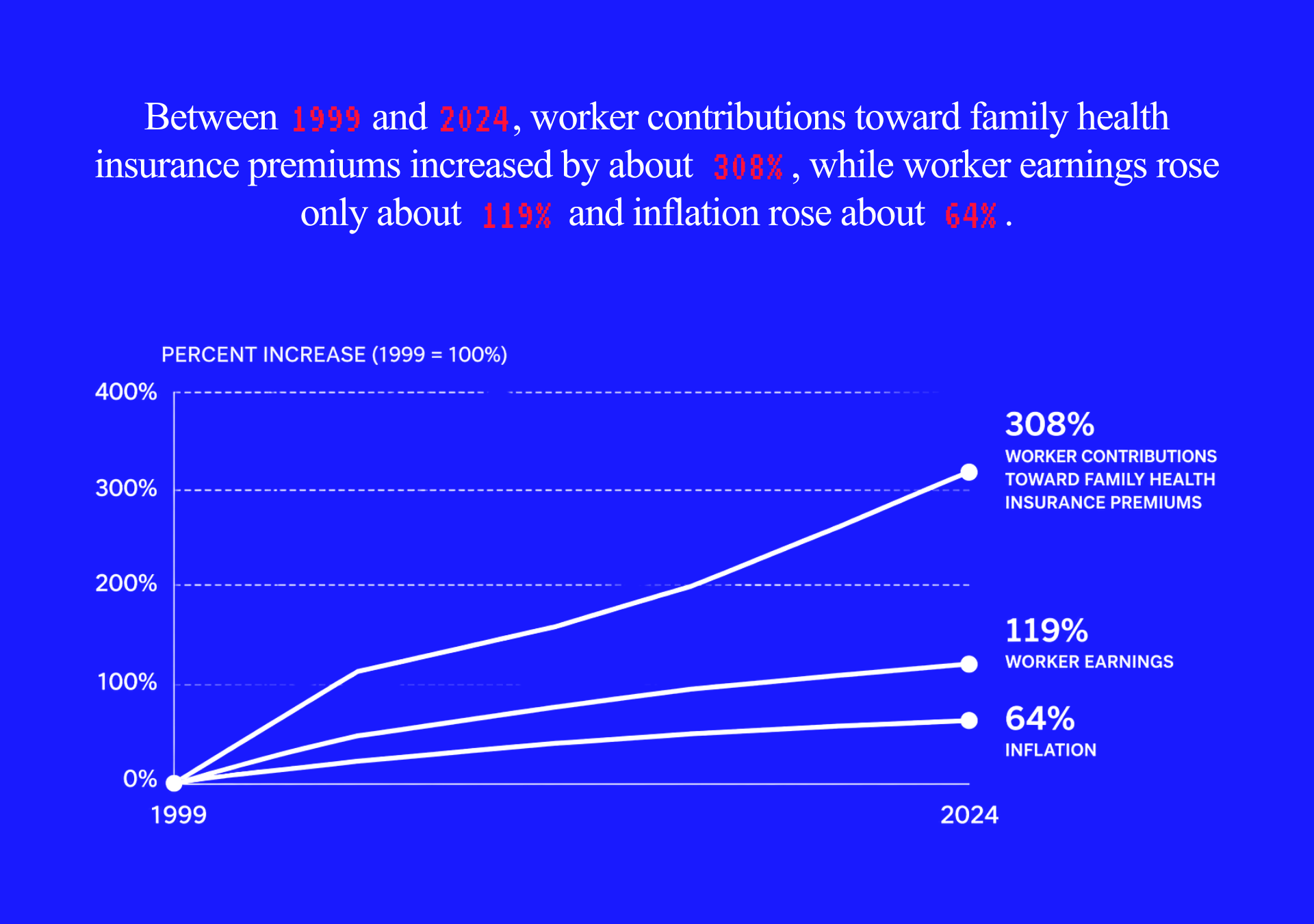
Healthcare is another place where the Dream Tax has become impossible to ignore. A healthy life has always been part of the American Dream, but staying financially protected has become more expensive. Since the late 1990s, employer-sponsored healthcare premiums have grown far faster than wages. Between 1999 and 2024, worker contributions toward family health insurance premiums increased by about 308%, while worker earnings rose only about 119% and inflation rose about 64%. Total family premiums increased about 342% over the same period. Today, the average employer-sponsored family health insurance premium is nearly $27,000 per year. For many middle-income families, premiums and deductibles together consume roughly 10% of median income. That is money that cannot also go toward a down payment, retirement savings, starting a business, or building wealth. The healthcare system has become a larger gatekeeper between working hard and getting ahead.
Education
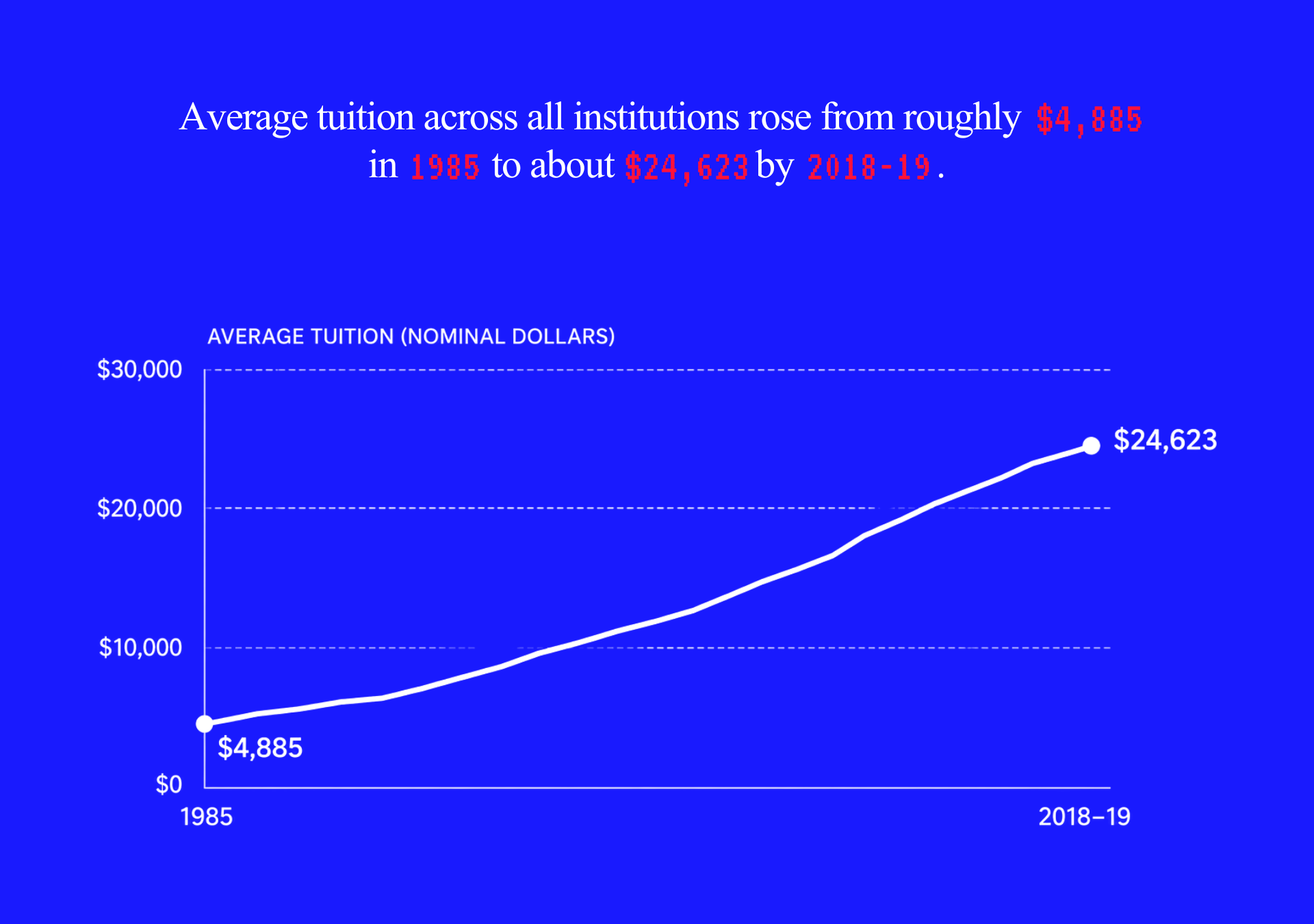
Education has long been viewed as a pathway into the middle class, and for many Americans, it still is. But the cost of accessing that pathway has changed dramatically. Average tuition across all institutions rose from roughly $4,885 in 1985 to about $24,623 by 2018–19. Four-year institutions increased from about $5,504 to more than $28,000 over that period. The 1980s were especially dramatic, with public college tuition rising sharply. Today, the story is more complicated: inflation-adjusted published tuition has flattened and, in some sectors, declined compared with recent highs. The issue is not that tuition is increasing endlessly every year, it’s that an entire generation entered adulthood carrying the accumulated weight of decades of rising costs. Student debt became a defining financial factor for millions of Young Americans — shaping when they can buy homes, start families, or invest for their future. Education is still an opportunity, but the price of entry has become a bigger part of the equation.
Food
Over the long term, food has actually become more affordable as a share of income. However, between 2020 and 2023, the share of disposable income Americans spent on food rose from about 9.47% to 11.21%. Grocery prices climbed roughly 28–30% since late 2019. Food is different from the other tenets of the Dream Tax. The long-term trend does not show the same widening gap between costs and incomes, but the recent spike matters because groceries are one of the few parts of the household budget Americans feel every single week. For Young Americans already facing higher housing costs, healthcare expenses, and education debt, grocery inflation became one more visible reminder that everyday life was getting harder to balance.
The Bigger Picture
The Dream Tax explains why so many Young Americans feel like they are working hard but getting less traction. A young worker today is often asked to put more of their income toward the basics before they can start building wealth. A delayed home purchase means fewer years of equity growth. Higher healthcare costs mean less flexibility. Student debt can mean years spent paying yesterday’s costs instead of investing in tomorrow. The effects compound. These are structural problems.
The purpose of identifying the Dream Tax is not to convince anyone that the American Dream is impossible. It is to understand what changed and what still needs to change. Young Americans are not asking for a shortcut. They are asking for the opportunity to pursue the same promise generations before them were given: that hard work can lead to stability, ownership, and a better future. Naming the problem is the first step toward building solutions.
The American Dream Institute (ADI) is a 501(c)(3) non-profit messaging lab and digital engagement engine built by and for the next generation of voices. ADI conducts research and polling, partners with online content creators, and undertakes community outreach to better understand young voters’ opinions on affordability, economic mobility, and prosperity.
